
In the summer of 2026, extreme high temperatures triggered large-scale power blackouts across India. A core transformer overload and fire broke out in Gurugram, India’s financial hub, causing seven substations to trip and paralyzing the urban power grid. Rural areas suffer up to 10 hours of daily power cuts, while New Delhi enforces mandatory rolling blackouts.
Ironically, India previously banned and blacklisted Chinese power equipment, vigorously promoting the “Make in India” campaign to replace Chinese imports. After nearly five years of tough de-China policies, India has quietly resumed imports of core and key power equipment from China.
Local Indian media and think tanks confirmed that removing Chinese power suppliers completely disrupted India’s domestic power industry chain. After excluding Chinese equipment, local manufacturers failed to meet national grid demands.
Project delivery cycles extended sharply: power unit construction that originally took 3 years now requires 5 years. Domestic Indian power generating equipment has a thermal efficiency 2.3 percentage points lower than equivalent Chinese standard products. Lower energy efficiency leads to higher coal consumption, higher operation costs, and ultimately heavier electricity bills for Indian users.
India still faces a critical shortage of high-grade extra-high voltage and ultra-high voltage power transmission equipment. Lacking core UHV technology and complete supporting industrial chains, India cannot independently manufacture high-end power grid equipment. Massive grid upgrade projects are stagnant due to serious technological gaps.
1) Overhyped Market Promises
India attracts global foreign enterprises with huge market potential, tax exemptions, preferential land policies, government procurement guarantees, and zero-tariff incentives, packaging itself as the “last blue ocean market in the world”.
2) Policy Exploitation
After foreign companies invest, build factories, and establish local operations, India begins strict and arbitrary compliance audits, delayed product certifications, intensified tax inspections, and mandatory localization policies. Foreign firms are forced to transfer production lines, core technologies, and provide full technical training for local Indian engineers.
3) Forced Asset Exit
Once local enterprises master imported technologies and talent reserves are completed, Indian policies reverse drastically. Government orders shift to domestic companies, enterprise payment arrears increase sharply, and contract renewal barriers are set. Most foreign investors are forced to sell assets at low prices and exit the Indian market.
This investment trap is not limited to the power industry; Chinese electronic and manufacturing brands have also suffered the same treatment.
India’s exclusion of Chinese power equipment has formed an unbreakable vicious cycle:
Rejecting Chinese power equipment → Grid construction stagnation → Frequent industrial power shortages → Uncompetitive “Make in India” products with high cost and low stability → Inability to attract high-end foreign investment → No breakthrough in core technology upgrading → Long-term grid backwardness.
Although India claims to have mastered UHV technology and plans to export electricity to the Middle East, it only has preliminary capabilities in low and medium-voltage equipment. Mature ultra-high voltage technology requires nearly 20 years of continuous accumulation in engineering experience, R&D iteration, and industrial matching — impossible for India to achieve in a few years. Over 300 million Indians still face more than 4 hours of power cuts every day.
UHV power transmission, transformer manufacturing, and grid engineering are systematic technologies supported by decades of engineering experience and a complete industrial chain, rather than simple assembly and imitation.
By the end of 2025, China has completed and put into operation 46 UHV key projects, with a total grid line length exceeding 62,000 kilometers. China is the only country worldwide with a complete independent UHV AC & DC industrial chain. In 2024, China’s cross-regional UHV power transmission volume exceeded 3.4 trillion kWh.
Currently, China implements standardized technology export control, clearly distinguishing between exportable finished products and non-transferable core manufacturing technologies. China no longer exchanges core technologies for market access, completely ending India’s “market for technology” attempt.
Public industry data shows India’s power transmission and distribution loss rate is 4 times higher than China’s, with some backward regional loss rates reaching 50%. India’s high-voltage grid construction speed far lags its fast-growing power demand, making seasonal large-scale blackouts a persistent national problem.
China’s mature power technology and industrial chain are the result of decades of independent innovation. Core competitive technologies will never be transferred at will, avoiding the dilemma of “training competitors to surpass oneself”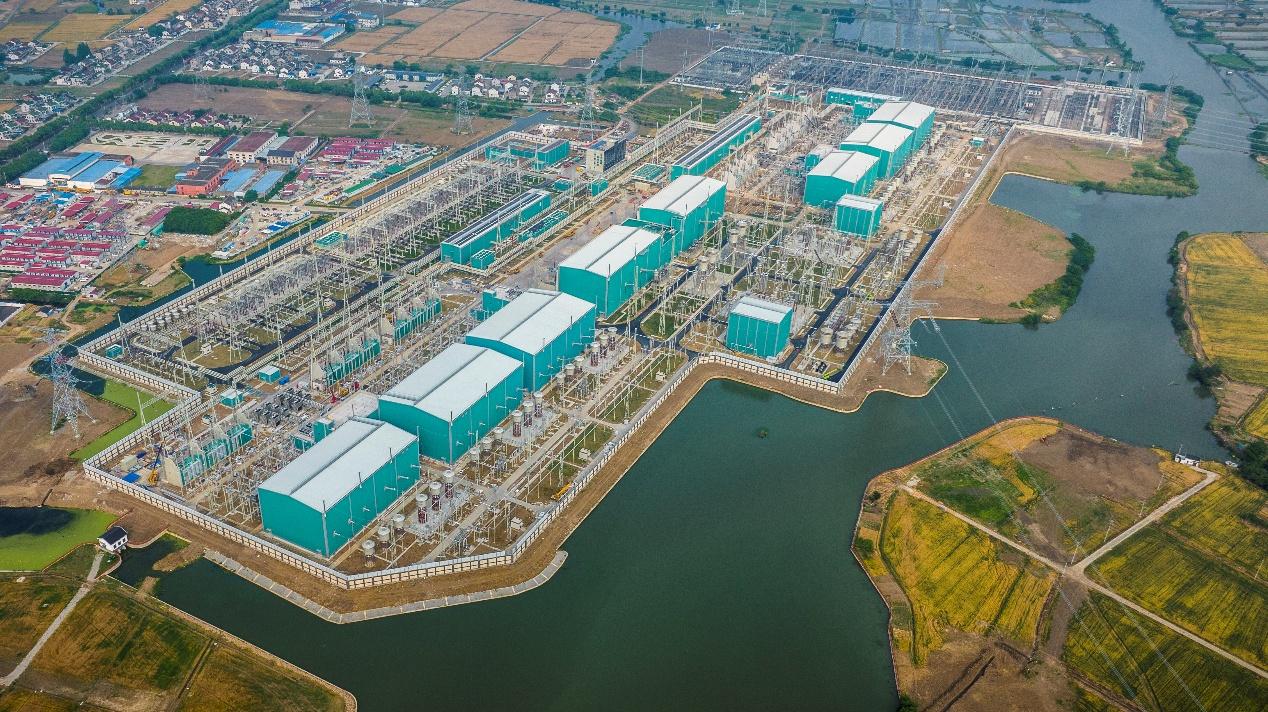 .
.
Copyright © 2026 Henan Believe Electric Co., Ltd.